3D Printing of Crowns and Dental Elements
Discover how resin crowns offer natural aesthetics and durability in direct restorations, optimizing clinical results.
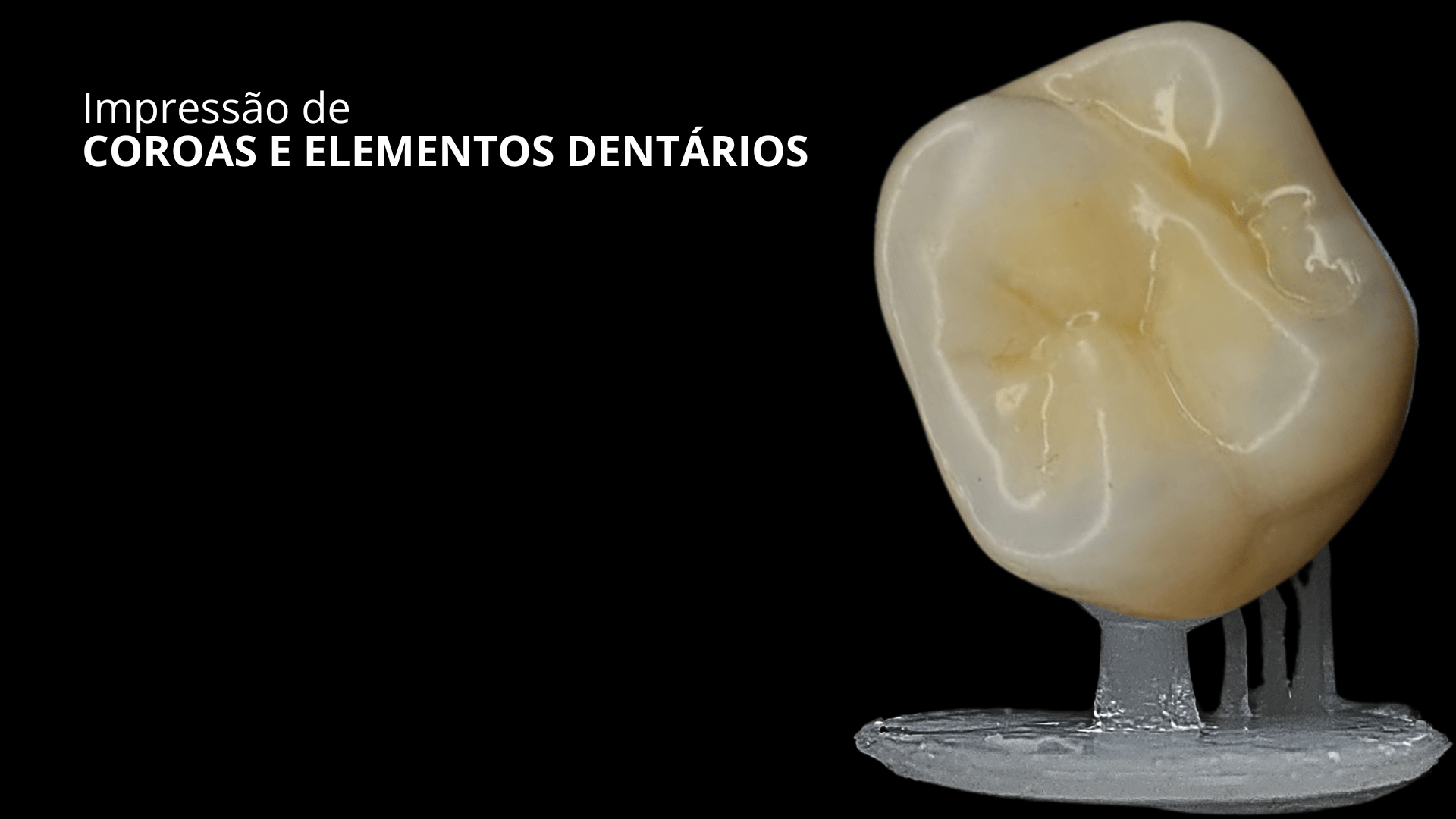
Discover how resin crowns offer natural aesthetics and durability in direct restorations, optimizing clinical results.
3D Printing of Crowns and Dental Elements: The Precision that Transforms the Clinic
📊 Quick Technical Summary
Dental 3D printing of crowns and dental elements with optimized resins offers the fidelity and resistance necessary for direct and indirect dental restorations, ensuring a clinically efficient process and natural aesthetic results.
- Main Material: Biocompatible 3D Resin
- Purpose: Crowns, inlays, onlays, veneers, and surgical guides
- Technology: High-resolution 3D printers
- Clinical Benefit: Reduced chair time and treatment personalization
Anyone working in the clinic or laboratory knows that every minute matters. The search for a perfect fit, for a color that integrates seamlessly, and for durability that avoids rework, is constant. The insecurity of a tight deadline or the hidden cost of a piece that does not meet expectations are realities that accompany daily life. It is a cycle of trial and error that consumes resources and energy.
The need for predictability is palpable. No one wants to deal with surprises during final installation, or with a dissatisfied patient due to a detail that could have been avoided. This silent frustration often leads to the search for alternatives that promise optimization, but do not always deliver the expected security.
The Reality of Digital Dentistry in Everyday Life
It is true that technology has brought advances, but also new complexities. The transition to the digital workflow promised agility, but the wrong choice of materials or equipment can turn this promise into another challenge. The compatibility between scanner, software, 3D printer, and dental 3D printing resin is a critical point that, if neglected, generates more headaches than solutions.
The reality is that, often, what is sought is a solution that integrates fluidly, almost invisibly, into the established process. Something that does not require a complete revolution, but that adds real and tangible value. Something that facilitates, and does not complicate.
3D Printing of Crowns and its Impact on Routine
When it comes to 3D printed crowns and dental elements, the first thing that comes to mind is precision. The ability to replicate the patient's anatomy, with perfect margins and exact occlusal contacts, is a game-changer. This means fewer adjustments in the chair, less adaptation time, and consequently, more satisfaction for both the patient and the professional.
The choice of 3D resin for these applications is not a detail; it is the foundation of quality. Natural aesthetics, wear resistance, and biocompatibility are characteristics that cannot be compromised. It is not just a matter of having a material, but of having the material that delivers what was promised in the digital planning. It is the materialization of expectation.
For those who already work with a 3D printer for dentists, the experience of producing a temporary crown or a study model with impressive fidelity is already a reality. This extends to definitive dental restorations, where technology and the right resin combine for a consistent result. It is the logical path for those seeking optimization without sacrificing quality.
The integration of a high-resolution 3D printer into the workflow is no longer an eccentricity, but a natural evolution. It positions itself as a tool that complements, that enhances what is already done, adding a layer of control and predictability. This is reflected in reduced costs with adjustments and, mainly, in saved time, which can be dedicated to attending more patients or other procedures.
It is clarity, investment security, and predictable financial return.
The Conscious and Professional Decision
Ultimately, the decision to adopt new technologies and materials is always strategic. It is not about following fads, but about making informed choices, based on evidence and the experience of those who have already walked the path. The ability to produce high-quality dental restorations, with efficiency and predictability, is not a luxury, but a growing necessity in modern dentistry.
The solution thus emerges as a natural consequence of this pursuit of excellence and efficiency. It is not a shortcut, but an optimized path to achieve the results every professional desires: patient satisfaction, clinical precision, and a clinic or laboratory operating at its full potential.
Vídeos relacionados
Perguntas Frequentes
What are 3D printed crowns and dental elements?
They are dental restorations manufactured by 3D printing, using biocompatible resins to reproduce crowns, inlays, onlays, veneers, and surgical guides.
What are the main clinical benefits of 3D printing for dental crowns?
3D printing offers natural aesthetics, durability, and high fidelity, optimizing clinical results and reducing chair time for treatment personalization.
What types of materials are used in 3D printing of dental elements?
Biocompatible 3D resins are used, developed to offer the necessary resistance and precision for direct and indirect restorations.
What are 3D printed crowns and dental elements?
They are dental restorations manufactured by 3D printing, using biocompatible resins to reproduce crowns, inlays, onlays, veneers, and surgical guides.
What are the main clinical benefits of 3D printing for dental crowns?
3D printing offers natural aesthetics, durability, and high fidelity, optimizing clinical results and reducing chair time for treatment personalization.
What types of materials are used in 3D printing of dental elements?
Biocompatible 3D resins are used, developed to offer the necessary resistance and precision for direct and indirect restorations.
What are the application possibilities for 3D printed crowns and dental elements?
3D printed crowns and dental elements can be used for crowns, inlays, onlays, veneers, and surgical guides.
What is the main material used in 3D printing of dental elements?
The main material used is biocompatible 3D resin, optimized to offer fidelity and resistance.
What are the clinical benefits of 3D printing for crowns and dental elements?
Benefits include reduced chair time and treatment personalization, ensuring natural aesthetic results and durability.
How does 3D printing contribute to precision in restorations?
3D printing technology with high resolution and optimized resins ensures the fidelity and resistance necessary for direct and indirect restorations with a perfect fit.
What are resin crowns for 3D printing?
They are direct and indirect dental restorations, such as crowns, inlays, onlays, and veneers, produced by 3D printers using optimized resins.
What are the main benefits of 3D printing for dental crowns?
3D printing offers natural aesthetics, durability, reduced chair time for the patient, and high treatment personalization.
What types of dental elements can be 3D printed?
In addition to crowns, it is possible to print inlays, onlays, veneers, and surgical guides, all with high fidelity and resistance.